
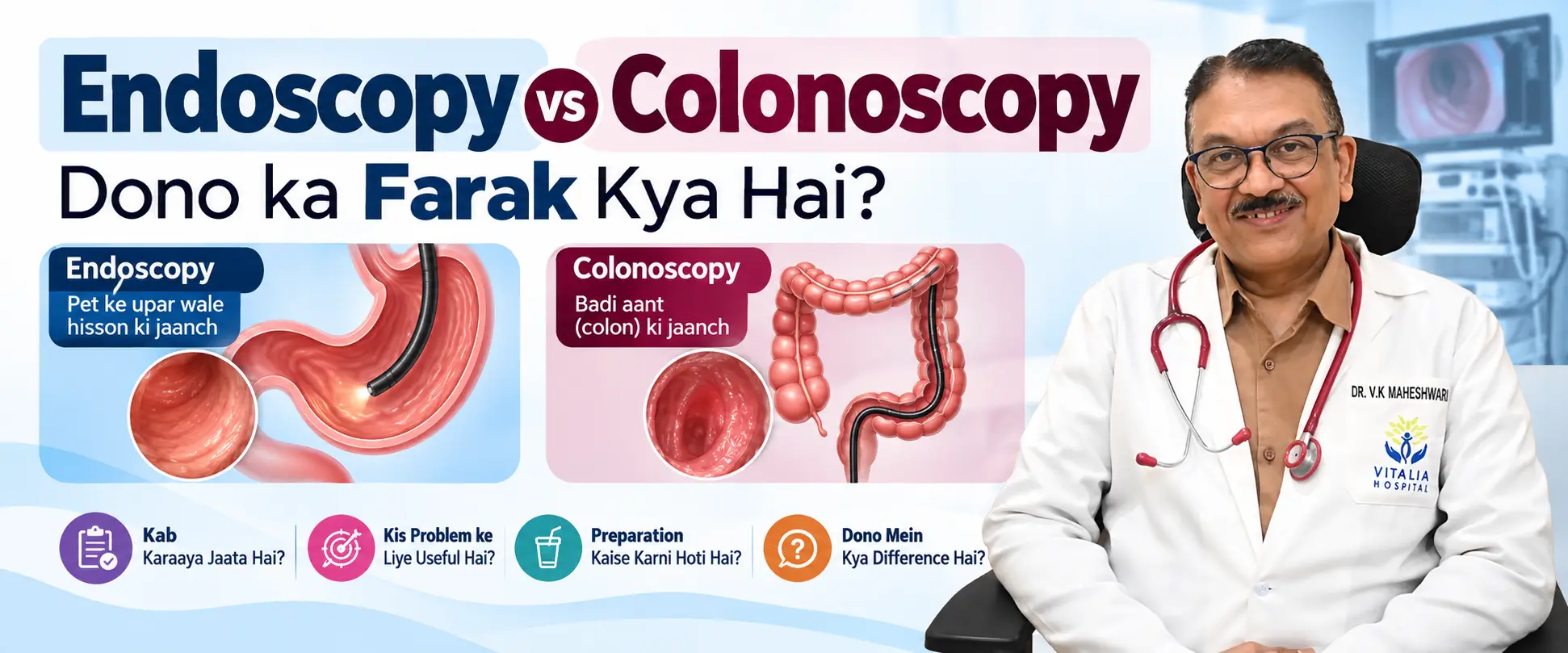
Endoscopy vs Colonoscopy: Differences, Uses and Preparation
Digestive problems such as persistent stomach pain, acidity, bloating, difficulty swallowing, or blood in stool can sometimes require more than routine medical examinations. Doctors may recommend procedures such as endoscopy or colonoscopy to examine the digestive tract and identify possible causes.
Although both procedures use a flexible tube equipped with a camera, they examine different parts of the digestive system and help diagnose different medical conditions.
Understanding endoscopy vs colonoscopy, their differences, uses, preparation, and recovery can help patients feel more informed before undergoing these investigations.
1. What Is an Endoscopy?
Endoscopy is a medical procedure in which a doctor uses a specialized instrument called an endoscope to examine internal organs or body passages.
In digestive healthcare, the term commonly refers to upper gastrointestinal (GI) endoscopy, also known as gastroscopy.
During an upper GI endoscopy, a thin, flexible tube with a camera is passed through the mouth to examine the:
- Oesophagus (food pipe)
- Stomach
- Duodenum (first part of the small intestine)
This procedure helps doctors identify inflammation, ulcers, bleeding, narrowing, and other abnormalities.
Small tissue samples, called biopsies, may also be collected when necessary.
2. What Is a Colonoscopy?
A colonoscopy is a medical procedure used to examine the inside of the large intestine, also called the colon, and the rectum.
During the procedure, a doctor gently inserts a flexible tube with a camera through the anus to inspect the intestinal lining.
A colonoscopy may help identify:
- Colorectal polyps
- Inflammation
- Sources of intestinal bleeding
- Diverticular disease
- Colorectal cancer
- Certain causes of persistent diarrhoea
Doctors can also collect tissue samples or remove some polyps during the procedure.
Colonoscopy is an important investigation for evaluating certain digestive symptoms and for colorectal cancer screening.
3. Endoscopy vs Colonoscopy: What Is the Difference?
The main difference between endoscopy and colonoscopy is the part of the digestive tract examined.
| Feature | Upper GI Endoscopy | Colonoscopy |
|---|---|---|
| Area examined | Oesophagus, stomach and duodenum | Colon and rectum |
| Entry point | Through the mouth | Through the anus |
| Common uses | Ulcers, swallowing problems, upper GI bleeding | Rectal bleeding, bowel changes, polyps |
| Preparation | Fasting before the procedure | Bowel cleansing and dietary preparation |
| Biopsy | Possible | Possible |
| Polyp removal | Some therapeutic procedures possible | Polyps can often be removed |
| Sedation | May be used | Often used |
| Typical procedure time | Around 10–20 minutes | Around 20–60 minutes |
These are general estimates. The actual procedure and duration depend on the patient’s condition and the investigations or treatments required.
4. Why Is an Endoscopy Done?
Doctors may recommend an upper GI endoscopy when symptoms suggest a problem involving the oesophagus, stomach, or upper small intestine.
Common reasons include:
- Persistent upper abdominal pain
- Difficulty swallowing
- Recurrent vomiting
- Unexplained upper digestive symptoms
- Suspected stomach or duodenal ulcers
- Vomiting blood
- Black, tar-like stools
- Unexplained iron-deficiency anaemia
- Evaluation of certain oesophageal conditions
An endoscopy can help doctors examine the digestive tract directly and collect biopsies when necessary.
Not every patient with acidity or indigestion requires endoscopy. The decision depends on symptoms, age, risk factors, and response to initial treatment.
5. Why Is a Colonoscopy Done?
Colonoscopy may be recommended to investigate symptoms involving the large intestine or rectum.
Common indications include:
- Blood in stool
- Persistent changes in bowel habits
- Chronic diarrhoea
- Unexplained iron-deficiency anaemia
- Suspected inflammatory bowel disease
- Unexplained weight loss with concerning digestive symptoms
- Abnormal results from colorectal screening tests
- Colorectal cancer screening or surveillance
Colonoscopy allows doctors to examine the colon and, when appropriate, remove polyps that could otherwise develop into cancer over time.
The need for screening depends on age, family history, medical conditions, and applicable medical guidelines.
6. Which Is Better: Endoscopy or Colonoscopy?
Neither procedure is universally better than the other.
The choice depends on which part of the digestive tract needs examination.
Upper GI endoscopy is generally used when the suspected problem involves the food pipe, stomach, or duodenum.
Colonoscopy is generally used when the suspected problem involves the colon or rectum.
In some patients, doctors may recommend both procedures to investigate unexplained gastrointestinal bleeding, anaemia, or other digestive conditions.
The most appropriate investigation should be determined after medical evaluation.
7. Is Endoscopy Painful?
Upper GI endoscopy may cause temporary discomfort, including a gagging sensation or pressure in the throat.
Doctors may use throat-numbing medication, sedation, or both to improve comfort.
During the procedure, patients may experience a feeling of fullness due to the air or gas used to examine the digestive tract.
Afterward, mild throat soreness or bloating may occur.
Most patients tolerate the procedure well, but individual experiences vary.
Patients should discuss concerns about discomfort, sedation, and possible risks with their healthcare team before the examination.
8. Is Colonoscopy Painful?
Colonoscopy may cause pressure, bloating, or abdominal cramping as the instrument moves through the colon.
Sedation or other pain-control measures are commonly used to improve comfort, depending on the patient’s needs and the healthcare facility.
Some patients remember little of the procedure when sedation is used.
Mild bloating or gas discomfort may occur afterward.
Severe or worsening abdominal pain after colonoscopy is not expected and requires prompt medical evaluation.
9. How to Prepare for an Endoscopy
Preparation is important for ensuring the doctor can clearly examine the upper digestive tract.
Follow Fasting Instructions
Patients are generally asked to avoid eating solid food for several hours before upper GI endoscopy.
Instructions for clear liquids may differ depending on the procedure and anaesthesia plan.
Always follow the specific fasting schedule provided by the hospital.
Inform Your Doctor About Medications
Tell your healthcare team about all medicines, particularly:
- Blood thinners
- Diabetes medication
- Insulin
- Weight-management or diabetes injections
- Other prescription medication
Do not stop prescribed medicines without medical advice.
Discuss Existing Medical Conditions
Inform the doctor about allergies, pregnancy, heart or lung conditions, and any previous reactions to sedation or anaesthesia.
Arrange Transportation if Sedation Is Planned
Patients receiving sedation may need someone to accompany them home and should not drive until medically cleared.
10. How to Prepare for a Colonoscopy
Colonoscopy requires thorough bowel preparation so the doctor can clearly inspect the intestinal lining.
Follow the Recommended Diet
Patients may be advised to modify their diet before the procedure, including following a low-fibre or clear-liquid diet for a specified period.
The exact instructions vary.
Take the Prescribed Bowel Preparation
A doctor usually prescribes a bowel-cleansing solution that causes frequent bowel movements.
It is important to complete the preparation exactly as instructed.
Maintain Hydration
Drink permitted clear liquids according to the hospital’s instructions to reduce the risk of dehydration.
Review Your Medications
Some medicines may need temporary adjustment, especially blood thinners and diabetes medications.
These changes must be made under medical guidance.
Arrange Help After Sedation
If sedation is planned, arrange for a responsible adult to accompany you home.
Poor bowel preparation can make it difficult to detect abnormalities and may require the colonoscopy to be repeated.
11. How Long Do Endoscopy and Colonoscopy Take?
An uncomplicated upper GI endoscopy commonly takes approximately 10–20 minutes.
A colonoscopy may take approximately 20–60 minutes, depending on the complexity of the examination and whether biopsies or polyp removal are required.
Additional time is needed for registration, preparation, sedation, and postoperative observation.
Patients should expect the overall hospital visit to take longer than the procedure itself.
12. What Happens After Endoscopy or Colonoscopy?
After either procedure, patients are monitored until they are ready for discharge.
After Upper GI Endoscopy
Temporary symptoms may include:
- Mild throat soreness
- Bloating
- Burping
- Temporary drowsiness if sedation was used
Eating and drinking can usually resume once the healthcare team confirms it is safe.
After Colonoscopy
Temporary symptoms may include:
- Bloating
- Passing gas
- Mild abdominal cramps
- Small amounts of bleeding after certain biopsies or polyp removal
Patients should follow the doctor’s instructions regarding diet, activity, medication, and follow-up.
Seek urgent medical care if you experience severe abdominal or chest pain, fever, repeated vomiting, significant bleeding, breathing difficulties, or worsening symptoms after either procedure.
13. Are Endoscopy and Colonoscopy Safe?
Upper GI endoscopy and colonoscopy are commonly performed diagnostic procedures and are generally safe when appropriately recommended and performed.
However, possible complications include:
- Bleeding, particularly after biopsy or polyp removal
- Perforation or injury to the digestive tract
- Sedation-related complications
- Infection, which is uncommon
- Aspiration or breathing complications in some patients
Serious complications are uncommon but can occur.
The risks depend on the procedure, patient health, medications, and whether additional treatments are performed.
Your doctor should explain the relevant benefits and risks before obtaining consent.
14. Can Endoscopy and Colonoscopy Detect Cancer?
Both procedures can help identify abnormalities that may indicate cancer.
Upper GI endoscopy can detect suspicious changes in the oesophagus, stomach, and duodenum.
Colonoscopy can detect colorectal polyps and suspicious lesions in the colon or rectum.
If an abnormal area is found, the doctor may collect a biopsy for laboratory examination.
A biopsy is often required to confirm whether a suspicious lesion is cancerous.
Colonoscopy can also help prevent some colorectal cancers by allowing removal of precancerous polyps.
15. When Should You See a Doctor for Digestive Problems?
Persistent or unexplained digestive symptoms should be medically evaluated.
Consult a doctor if you experience:
- Recurrent or persistent abdominal pain
- Difficulty swallowing
- Frequent vomiting
- Blood in stool
- Persistent changes in bowel movements
- Unexplained weight loss
- Iron-deficiency anaemia
- Ongoing digestive symptoms that do not improve with treatment
Seek emergency medical attention for vomiting blood, heavy rectal bleeding, fainting, severe abdominal pain, or black, tar-like stools accompanied by weakness or dizziness.
Early medical evaluation can help determine whether endoscopy, colonoscopy, or another investigation is appropriate.
16. Digestive Health Consultation at Vitalia Hospital, Ranchi
If you are experiencing persistent digestive symptoms, obtaining a proper diagnosis is an important first step toward appropriate treatment.
Vitalia Hospital, Ranchi, provides medical and surgical consultation for a range of abdominal and gastrointestinal concerns.
Consult Dr. V.K. Maheshwari
Dr. V.K. Maheshwari, MBBS, MS, FICS, FIAGES, is a Senior Consultant General & Laparoscopic Surgeon associated with Vitalia Hospital, Ranchi.
His surgical practice includes the evaluation and management of various abdominal and general surgical conditions.
Depending on your symptoms and clinical findings, a doctor may recommend further investigations or referral to a gastroenterologist or an appropriately trained endoscopist.
Patients should confirm the availability of specific endoscopy or colonoscopy services directly with the hospital before scheduling an appointment.
Looking for digestive health consultation in Ranchi?
Contact Vitalia Hospital to discuss your symptoms and learn about the appropriate diagnostic and treatment options.
17. Frequently Asked Questions About Endoscopy and Colonoscopy
1. What is the main difference between endoscopy and colonoscopy?
Upper GI endoscopy examines the oesophagus, stomach, and duodenum through the mouth. Colonoscopy examines the colon and rectum through the anus.
2. Which procedure is used for stomach pain?
Upper GI endoscopy may be recommended for certain causes of upper abdominal pain, but not every patient with stomach pain requires it. The appropriate investigation depends on the symptoms and clinical examination.
3. Which procedure is used for blood in stool?
Colonoscopy is often used to investigate lower gastrointestinal bleeding. However, the most appropriate test depends on the suspected source and severity of bleeding.
4. Can endoscopy and colonoscopy be done on the same day?
Yes. In selected patients, both procedures may be performed during the same appointment when medically appropriate.
5. Is fasting required before endoscopy?
Yes. Patients are generally required to fast before upper GI endoscopy. Follow the specific food and liquid restrictions provided by the healthcare team.
6. Is bowel preparation necessary for colonoscopy?
Yes. Adequate bowel cleansing is essential for a clear examination of the colon. Patients must follow the prescribed preparation instructions.
7. Can I eat immediately after endoscopy?
Patients can generally resume eating and drinking once the doctor confirms it is safe, especially after throat anaesthesia or sedation.
8. How long does it take to recover after colonoscopy?
Many patients resume normal activities the following day after an uncomplicated colonoscopy. Recovery may take longer if a therapeutic procedure was performed or complications occur.
9. Does colonoscopy detect piles?
A colonoscopy may reveal some anorectal abnormalities, but piles are often better evaluated through a focused anal examination and anoscopy when appropriate.
10. Can endoscopy detect stomach ulcers?
Yes. Upper GI endoscopy can identify stomach and duodenal ulcers and may allow biopsy when needed.
11. Can colonoscopy prevent colorectal cancer?
Colonoscopy can help prevent some colorectal cancers by detecting and removing precancerous polyps. It is also used for screening and investigating concerning symptoms.
12. What is the cost of endoscopy or colonoscopy in Ranchi?
The cost depends on the procedure, sedation, biopsies, polyp removal, and other hospital-related factors. Contact the healthcare provider for an individualized estimate.
13. Which doctor performs endoscopy and colonoscopy?
These procedures are performed by appropriately trained specialists, including gastroenterologists and some surgeons with relevant endoscopy training.
Conclusion
Understanding the difference between endoscopy and colonoscopy can help patients prepare for diagnostic investigations and make informed healthcare decisions.
While upper GI endoscopy examines the oesophagus, stomach, and upper small intestine, colonoscopy examines the colon and rectum.
Both procedures play important roles in diagnosing digestive conditions, investigating bleeding, and identifying abnormalities that may require treatment.
If you experience persistent abdominal pain, blood in stool, difficulty swallowing, or unexplained digestive symptoms, consult a qualified healthcare professional.
Vitalia Hospital, Ranchi, offers medical and surgical consultation for digestive and abdominal concerns, with further investigations or specialist referral recommended according to individual needs.
Medical Disclaimer: This article is intended for general educational purposes only and does not replace professional medical advice, diagnosis, or treatment. Endoscopy and colonoscopy should be performed only when medically appropriate, and preparation instructions must be obtained from the treating healthcare team.