
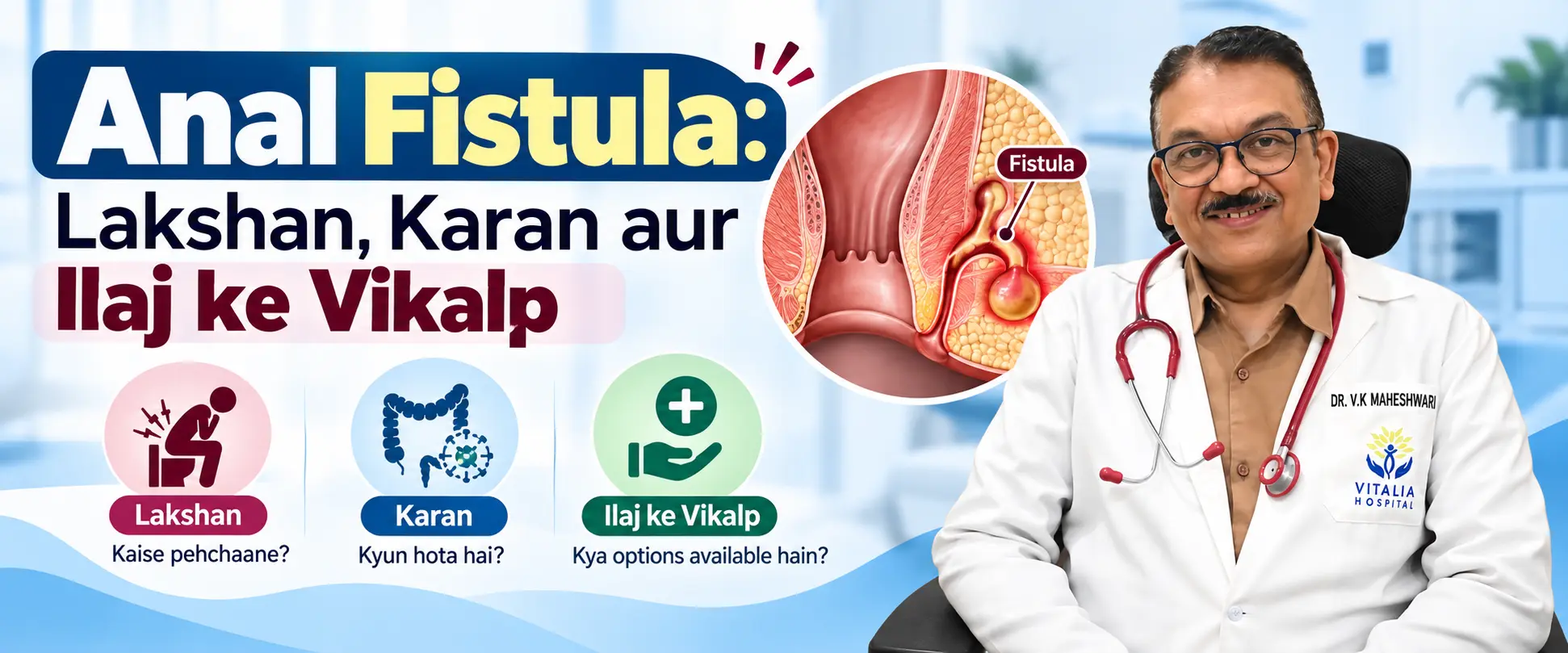
Anal Fistula: Symptoms, Causes and Treatment Options
Anal fistula is a medical condition that can cause persistent pain, swelling, discharge, and discomfort around the anus. Many people initially mistake these symptoms for piles or other minor anal problems, which can delay proper diagnosis and treatment.
An anal fistula is an abnormal tunnel that develops between the inside of the anal canal and the skin surrounding the anus. It commonly develops after an infection or an anal abscess.
Unlike some other anorectal conditions, anal fistulas rarely heal permanently without medical or surgical treatment. Early diagnosis is important to control infection, identify the fistula tract, and prevent repeated complications.
If you are experiencing recurring anal pain, swelling, or discharge and looking for anal fistula treatment in Ranchi, understanding the symptoms, causes, and available treatment options can help you seek appropriate medical care.
1. What Is an Anal Fistula?
An anal fistula is an abnormal passage connecting the anal canal to the skin near the anus.
It usually develops when an infected anal gland causes an abscess. After the abscess drains, a small tunnel may remain between the anal canal and the skin.
This tunnel can continue to discharge pus or fluid and may cause repeated episodes of swelling and infection.
Anal fistulas can vary in complexity depending on their location, length, branching pattern, and relationship with the muscles responsible for bowel control.
Some fistulas are relatively simple, while others involve deeper tissues and require more complex treatment.
2. What Causes an Anal Fistula?
The most common cause of an anal fistula is a previous anal abscess.
An anal abscess develops when a gland near the anus becomes infected and forms a collection of pus.
Even after the abscess drains naturally or is surgically treated, an abnormal tunnel may remain.
Other possible causes or associated conditions include:
- Crohn’s disease: A chronic inflammatory bowel condition that can cause fistulas.
- Previous anal infections: Repeated infections may contribute to fistula formation.
- Anal injury or surgery: Certain injuries or surgical complications can occasionally lead to fistulas.
- Tuberculosis: In some patients, tuberculosis may be associated with fistula formation.
- Radiation treatment: Previous radiation involving the pelvic region may contribute to abnormal tissue connections.
- Other inflammatory conditions: Certain diseases can increase the risk of complex fistulas.
However, many anal fistulas develop without any underlying chronic disease.
3. What Are the Early Symptoms of an Anal Fistula?
The symptoms of an anal fistula may initially resemble those of an anal abscess, piles, or other anorectal conditions.
Common symptoms include:
- Persistent or recurring pain near the anus
- Swelling around the anal opening
- Pus or fluid discharge
- Irritation or itching around the anus
- A small opening or lump near the anus
- Unpleasant-smelling discharge
- Pain while sitting or passing stool
- Repeated episodes of infection
Some patients notice that swelling improves after pus drains, only to return later.
This repeated cycle of swelling and discharge is a common warning sign of an anal fistula.
4. Can an Anal Fistula Cause Pain and Swelling?
Yes. Anal fistulas may cause pain and swelling, particularly when the fistula tract becomes infected or drainage is blocked.
The pain may feel:
- Throbbing
- Persistent
- Sharp during bowel movements
- Worse while sitting
- More severe when an abscess develops
In some patients, pain decreases after pus drains from the external opening.
However, reduced pain does not necessarily mean the fistula has healed.
If swelling becomes severe or is accompanied by fever, medical assessment is important because an abscess may require urgent drainage.
5. Why Does an Anal Fistula Cause Pus Discharge?
An anal fistula forms a connection between the anal canal and the skin.
Because the tract may remain infected or inflamed, pus and other fluids can drain through the external opening.
The discharge may be:
- Yellowish or whitish
- Mixed with small amounts of blood
- Associated with an unpleasant smell
- Continuous or intermittent
Some patients experience repeated staining of their underwear.
Persistent pus discharge near the anus should be evaluated by a doctor rather than treated only with creams or home remedies.
6. Anal Fistula vs Piles: What Is the Difference?
Anal fistulas and piles are different medical conditions, although they can cause discomfort in the same area.
| Feature | Anal Fistula | Piles (Haemorrhoids) |
|---|---|---|
| Main problem | Abnormal tunnel between anal canal and skin | Enlarged haemorrhoidal tissue |
| Common symptoms | Pus discharge, recurring swelling, pain | Bleeding, itching, swelling, prolapse |
| Pus discharge | Common | Not typical |
| Rectal bleeding | May occur | Common |
| Recurrent infection | Possible | Not typical |
| Treatment | Usually requires a procedure or surgery | May improve with lifestyle changes, medication, or procedures |
A proper medical examination is necessary because symptoms can overlap with other anorectal conditions.
7. What Are the Different Types of Anal Fistula?
Anal fistulas are classified according to their relationship with the anal sphincter muscles.
These muscles help control bowel movements.
Intersphincteric Fistula
The tract runs between the internal and external anal sphincter muscles.
Transsphincteric Fistula
The fistula passes through part of the external anal sphincter muscle.
Suprasphincteric Fistula
The tract travels above part of the sphincter complex before reaching the surrounding skin.
Extrasphincteric Fistula
This is an uncommon type of fistula that travels outside the usual sphincter pathway.
Fistulas may also be described as simple or complex depending on their anatomy, recurrence, branching, and associated medical conditions.
The type of fistula helps determine the most appropriate treatment.
8. Can an Anal Fistula Heal Without Surgery?
Most anal fistulas do not heal permanently without a medical procedure.
Antibiotics may help treat certain associated infections, but they generally cannot eliminate the fistula tract.
Similarly, creams, painkillers, and home remedies may temporarily relieve symptoms without correcting the underlying problem.
In selected patients, particularly those with Crohn’s disease, medical treatment may play an important role alongside procedural management.
For most fistulas arising from infected anal glands, surgery or another specialist procedure is commonly needed.
The appropriate treatment depends on the fistula’s anatomy and the patient’s medical condition.
9. How Is an Anal Fistula Diagnosed?
Diagnosis usually begins with a medical history and physical examination.
Medical History
The doctor asks about pain, swelling, discharge, previous abscesses, and recurring infections.
Physical Examination
The area around the anus is examined for an external opening, swelling, or discharge.
Digital Rectal Examination
A gentle examination may help identify associated abnormalities when clinically appropriate.
MRI Fistulogram
MRI may be recommended to map the fistula tract, particularly in complex or recurrent cases.
It can help identify branches, abscesses, and the relationship of the fistula to the sphincter muscles.
Examination Under Anaesthesia
In some patients, the surgeon may need to examine the fistula under anaesthesia to identify its anatomy and plan treatment.
Not every patient requires every investigation. The choice depends on the clinical findings.
10. What Are the Treatment Options for Anal Fistula?
Several procedures are available for treating anal fistulas.
The main goal is to heal the fistula while preserving bowel-control function.
Fistulotomy
Fistulotomy involves opening the fistula tract so it can heal from the inside outward.
It is commonly used for appropriately selected simple fistulas where only a limited amount of sphincter muscle is involved.
Seton Placement
A seton is a surgical thread or similar material placed through the fistula tract.
A draining seton may help maintain drainage and control infection, particularly in complex fistulas.
It may be used as part of a staged treatment plan.
LIFT Procedure
LIFT stands for ligation of the intersphincteric fistula tract.
This technique aims to close the fistula connection while minimizing injury to the sphincter muscles.
Advancement Flap Procedure
An advancement flap uses healthy tissue to cover the internal fistula opening.
It may be considered in selected complex fistulas.
Laser Fistula Treatment
Laser-based procedures use laser energy inside the fistula tract to attempt closure.
They may be considered for selected patients, but success rates vary, and recurrence can occur.
Laser treatment is not necessarily better than established surgical methods for every fistula.
The surgeon should explain the expected benefits, limitations, recurrence risk, and possible effects on bowel control before recommending a procedure.
11. What Is Laser Treatment for Anal Fistula?
Laser fistula treatment is a minimally invasive technique that uses a laser fibre to deliver controlled energy inside the fistula tract.
The aim is to treat the tract and encourage closure while avoiding extensive cutting of surrounding tissue.
Potential Benefits
For selected patients, potential advantages may include:
- Limited external tissue cutting
- Preservation of sphincter muscles
- Smaller treatment wounds
- Less postoperative discomfort in some cases
- Earlier return to activities in some patients
However, laser fistula treatment is not suitable for every fistula.
Complex branching tracts, active abscesses, and certain recurrent fistulas may require alternative or additional procedures.
Long-term success varies, and repeat treatment may be necessary.
12. Is Anal Fistula Surgery Painful?
Anal fistula surgery is performed using appropriate anaesthesia, so significant pain should generally be prevented during the procedure.
After surgery, some discomfort is expected.
The degree of postoperative pain depends on:
- Type of fistula
- Surgical technique
- Size and location of the wound
- Presence of infection
- Individual healing response
Pain-relieving medication, wound care, and appropriate bowel management may help improve comfort.
Patients should follow their surgeon’s instructions and report severe or worsening pain.
13. How Long Does Recovery Take After Anal Fistula Surgery?
Recovery time varies considerably depending on the type of fistula and the treatment performed.
Patients undergoing a relatively simple procedure may return to light daily activities within several days.
However, complete wound healing may take several weeks or longer.
Complex fistulas or staged procedures may require a longer treatment and recovery period.
Tips for Recovery
Maintain hygiene: Clean the affected area according to your surgeon’s instructions.
Follow wound-care advice: Dressings or other wound care may be required.
Prevent constipation: Eat fibre-rich foods, maintain hydration, and use prescribed stool softeners if recommended.
Take medication as directed: Use pain relief and other prescribed medicines appropriately.
Attend follow-up appointments: Regular follow-up helps monitor healing and identify recurrence or complications.
Seek medical attention if you develop fever, increasing swelling, severe pain, heavy bleeding, or worsening discharge.
14. Can an Anal Fistula Come Back After Treatment?
Yes. Anal fistulas can recur even after appropriate treatment.
Recurrence may occur when:
- Part of the fistula tract remains
- Additional branches were not identified
- Infection persists
- The fistula is complex
- An underlying condition such as Crohn’s disease contributes to inflammation
The risk of recurrence varies by fistula type and treatment technique.
Accurate diagnosis, appropriate surgical planning, and postoperative follow-up are important for improving treatment outcomes.
15. What Happens If an Anal Fistula Is Left Untreated?
An untreated anal fistula may continue to cause repeated episodes of infection and discharge.
Possible complications include:
- Recurrent anal abscesses
- Persistent pain
- Ongoing pus discharge
- Skin irritation
- Formation of additional fistula branches
- More complex fistula anatomy
Some patients experience periods of reduced symptoms, but this does not necessarily indicate healing.
Early medical evaluation can help prevent prolonged discomfort and identify complications.
16. Anal Fistula Treatment at Vitalia Hospital, Ranchi
If you are experiencing recurring anal pain, swelling, pus discharge, or repeated infections, a medical evaluation can help identify whether an anal fistula is present.
Vitalia Hospital, Ranchi, provides general surgical and proctology consultation for conditions such as piles, fissures, and anal fistulas.
Consult Dr. V.K. Maheshwari
Dr. V.K. Maheshwari, MBBS, MS, FICS, FIAGES, is a Senior Consultant General & Laparoscopic Surgeon and Laser Proctologist associated with Vitalia Hospital, Ranchi.
His surgical practice includes the assessment and management of anorectal conditions.
Depending on the fistula’s anatomy and severity, treatment may involve conventional surgery, sphincter-preserving procedures, or other appropriate approaches.
Patients should confirm the availability and suitability of specific procedures, including laser treatment, during consultation.
Looking for anal fistula treatment in Ranchi?
Contact Vitalia Hospital to arrange a consultation and understand the available diagnostic and treatment options.
17. Frequently Asked Questions About Anal Fistula
1. What is the first sign of an anal fistula?
A common early sign is recurring swelling or pain near the anus, sometimes followed by pus discharge from a small opening in the skin.
2. Is anal fistula the same as piles?
No. An anal fistula is an abnormal tunnel connecting the anal canal to nearby skin. Piles are enlarged haemorrhoidal tissues that commonly cause bleeding, itching, or swelling.
3. Can anal fistula heal naturally?
Most anal fistulas do not heal permanently on their own. Medical evaluation and a procedure are usually required.
4. Is anal fistula dangerous?
An anal fistula is not always an immediate emergency, but it can cause recurrent abscesses, infection, and ongoing discomfort. Fever, rapidly increasing swelling, or severe pain requires urgent assessment.
5. Can antibiotics cure anal fistula?
Antibiotics may be used to treat associated infections in selected patients, but they generally do not eliminate the fistula tract.
6. Is laser treatment effective for anal fistula?
Laser treatment may be effective for selected patients, but outcomes vary. Recurrence and treatment failure are possible, and other surgical techniques may be more appropriate depending on the fistula.
7. Is anal fistula surgery safe?
Anal fistula surgery is commonly performed, but it carries risks such as bleeding, infection, recurrence, and possible changes in bowel control. The risks depend on the fistula and procedure.
8. How many days of rest are needed after fistula surgery?
Some patients can resume light activities within several days, while others need more time. Complete healing may take several weeks or longer, depending on the treatment.
9. Can anal fistula occur again after surgery?
Yes. Recurrence is possible, particularly in complex fistulas or patients with underlying inflammatory conditions.
10. Can an anal fistula cause bleeding?
Yes. Some patients notice small amounts of blood mixed with discharge or during bowel movements.
11. What is the cost of anal fistula surgery in Ranchi?
The cost depends on the fistula’s complexity, investigations, procedure, anaesthesia, hospital stay, and postoperative care. An individualized estimate can be provided after medical evaluation.
12. Which doctor treats anal fistula?
Anal fistulas are treated by qualified colorectal surgeons or general surgeons experienced in proctology and fistula management.
13. Can anal fistula turn into cancer?
Cancer developing in association with a longstanding anal fistula is very rare. However, persistent, recurrent, or unusual fistula symptoms should be evaluated, particularly in patients with Crohn’s disease.
14. Can anal fistula affect bowel control?
Certain complex fistulas and surgical procedures can involve the anal sphincter muscles. Preserving bowel-control function is an important consideration when selecting treatment.
Conclusion
Anal fistula is a condition that can cause recurring pain, swelling, pus discharge, and infection around the anus. Although symptoms may temporarily improve, most anal fistulas do not heal permanently without appropriate treatment.
Treatment options include fistulotomy, seton placement, LIFT, advancement flap procedures, and laser-based techniques for selected patients.
The most appropriate treatment depends on the fistula’s location, complexity, relationship with the sphincter muscles, and the patient’s overall health.
If you are experiencing symptoms of anal fistula, Vitalia Hospital, Ranchi, provides surgical consultation for diagnosis and treatment planning.
Medical Disclaimer: This article is for general educational purposes and does not replace professional medical advice, diagnosis, or treatment. Treatment decisions should be made by a qualified healthcare professional after examination.