
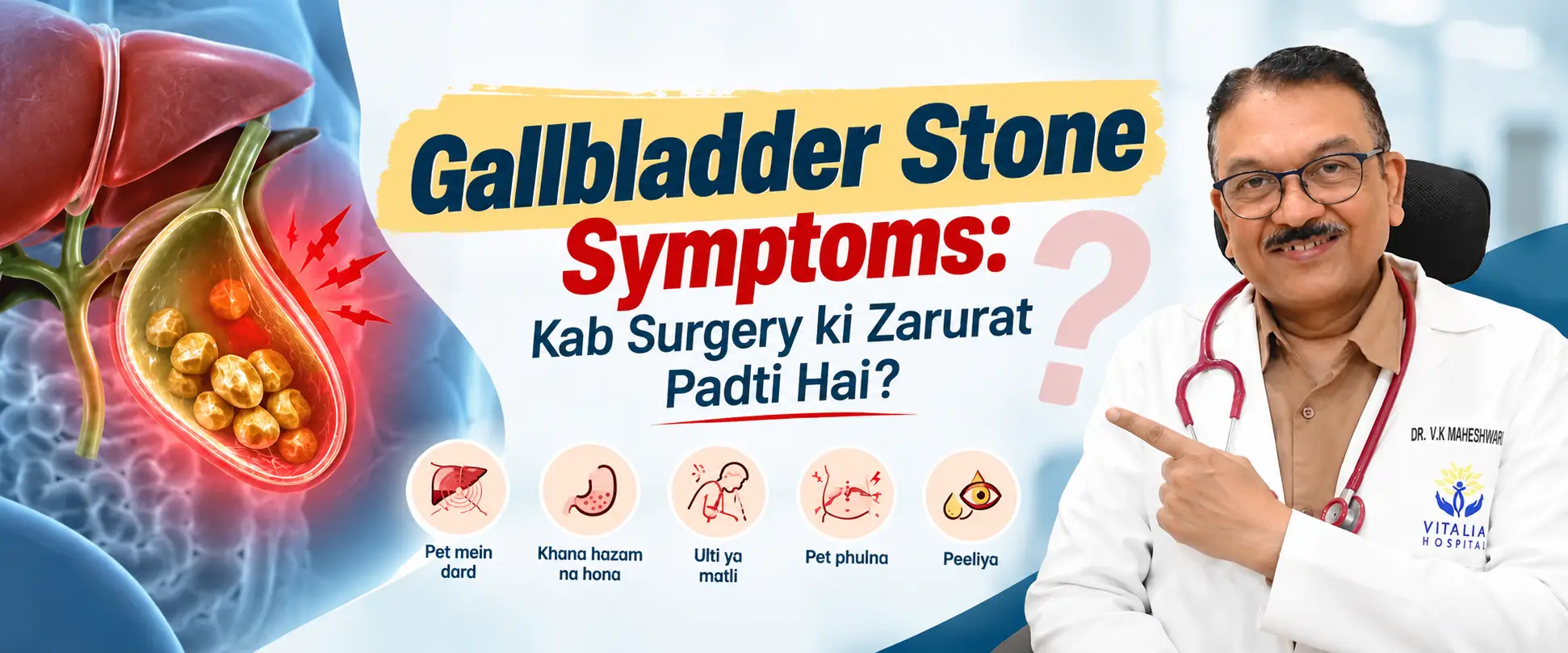
Gallbladder stones, also known as gallstones, are a common digestive condition. Some people may have gallstones without experiencing any problems, while others develop recurring abdominal pain, nausea, vomiting, or complications that require medical treatment.
Understanding the symptoms of gallbladder stones can help you know when it is time to consult a doctor and whether surgery may need to be considered.
What Are Gallbladder Stones?
Gallbladder stones are hardened deposits that form inside the gallbladder, a small organ located below the liver. The gallbladder stores bile, a digestive fluid produced by the liver that helps the body digest fats.
Gallstones can vary considerably in size and number. Some people may develop a single stone, while others may have multiple stones.
Gallstones are broadly classified into cholesterol stones and pigment stones. Cholesterol stones are the more common type.
Having gallstones does not automatically mean that surgery is required. Treatment depends on whether the stones are causing symptoms or complications.
What Causes Gallstones?
Gallstones can develop when the substances that make up bile become imbalanced or when the gallbladder does not empty properly.
Several factors may increase the likelihood of developing gallstones, including:
Being overweight or obese
Rapid weight loss
Increasing age
Pregnancy
Family history of gallstones
Certain medical conditions
Diet and metabolic factors
Changes in cholesterol or bilirubin levels in bile
However, a person can develop gallstones even without obvious risk factors.
What Are the Common Symptoms of Gallbladder Stones?
Many people with gallstones experience no symptoms. When a gallstone blocks the normal flow of bile, however, it can cause pain and other digestive symptoms.
Common gallbladder stone symptoms may include:
Sudden or intense pain in the upper-right abdomen
Pain in the upper-middle abdomen
Pain after eating, particularly after a heavy or fatty meal
Nausea
Vomiting
Indigestion or abdominal discomfort
Pain that spreads toward the back or right shoulder
Recurrent episodes of abdominal pain
The type and severity of symptoms can vary from one patient to another. Similar symptoms can also occur with other digestive conditions, so proper medical evaluation is important.
Where Is Gallbladder Stone Pain Usually Felt?
Gallstone-related pain is commonly felt in the upper-right part of the abdomen, underneath the ribs. Some patients experience pain in the upper-middle portion of the abdomen instead.
The pain may also radiate toward the back or right shoulder.
A typical episode of gallbladder pain may occur after eating and can last from several minutes to several hours.
Persistent, severe, or recurring abdominal pain should not simply be assumed to be gas or acidity. A doctor may recommend tests such as an abdominal ultrasound to determine whether gallstones or another condition are responsible.
Can Gallstones Exist Without Symptoms?
Yes. Some people have gallstones without experiencing pain or other noticeable symptoms. These are often referred to as asymptomatic or silent gallstones.
Silent gallstones may be discovered accidentally during an ultrasound or another abdominal investigation performed for a different reason.
Not every person with silent gallstones requires surgery.
Whether treatment is necessary depends on several factors, including symptoms, medical history, examination findings, and the risk of complications. A doctor or surgeon should evaluate the individual situation before recommending treatment.
What Warning Signs Need Medical Attention?
Gallstones can sometimes cause complications, particularly if a stone blocks a bile duct or leads to inflammation or infection.
Seek prompt medical attention if abdominal pain is accompanied by symptoms such as:
Severe or persistent upper abdominal pain
Fever or chills
Yellowing of the skin or eyes (jaundice)
Repeated vomiting
Significant abdominal tenderness
Dark urine or unusually pale stools
Pain that continues to worsen
These symptoms can indicate a complication and should not be ignored.
Severe abdominal pain with fever, jaundice, persistent vomiting, or significant weakness requires urgent medical assessment.
When Is Gallbladder Surgery Recommended?
Having gallstones does not automatically mean that the gallbladder needs to be removed.
Surgery may be considered when gallstones are causing recurrent symptoms or complications.
A surgeon may recommend gallbladder removal in situations such as:
Repeated episodes of gallstone-related pain
Inflammation of the gallbladder
Gallstones causing complications
Stones affecting the bile ducts
Other clinical circumstances where surgery is considered appropriate
The decision is based on the patient’s symptoms, test results, overall health, and clinical assessment.
The standard operation used to remove the gallbladder is called a cholecystectomy.
How Does Laparoscopic Gallbladder Surgery Work?
Laparoscopic cholecystectomy is a minimally invasive technique commonly used for gallbladder removal.
Instead of making one large abdominal incision, the surgeon generally makes several small incisions. A laparoscope—a thin instrument equipped with a camera—is inserted through one of these openings.
The camera allows the surgeon to view the abdominal area on a monitor while specialized instruments are used to carefully remove the gallbladder.
Compared with traditional open surgery, laparoscopic surgery may offer advantages for appropriately selected patients, such as:
Smaller incisions
Less postoperative discomfort in many patients
Reduced scarring
Shorter hospital stay in many cases
Faster return to routine activities
However, laparoscopic surgery may not be suitable for every patient. In certain situations, open surgery may be required. The appropriate surgical approach is decided after medical evaluation.
How Long Is Recovery After Gallbladder Surgery?
Recovery after gallbladder surgery varies depending on the surgical technique, the patient’s overall health, the complexity of the procedure, and whether complications were present.
After uncomplicated laparoscopic gallbladder surgery, many patients are able to begin walking relatively soon after the procedure and gradually return to normal daily activities.
Patients should follow their surgeon’s instructions regarding:
Wound care
Diet
Physical activity
Lifting heavy objects
Medications
Follow-up appointments
Some patients may initially experience temporary digestive changes after gallbladder removal. The body generally continues to digest food because bile produced by the liver can flow directly into the intestine.
Your surgeon will advise when it is safe to return to work, exercise, driving, and other normal activities.
Gallbladder Stone Treatment at Vitalia Hospital, Ranchi
If you are experiencing recurring upper abdominal pain or have already been diagnosed with gallstones, getting a proper surgical evaluation can help determine the appropriate next step.
Vitalia Hospital, Ranchi provides evaluation and treatment for gallbladder stones and other general and laparoscopic surgical conditions.
The treatment approach is determined after reviewing the patient’s symptoms, medical history, diagnostic investigations, and overall health.
Where appropriate, minimally invasive laparoscopic surgery may be considered.
If you have been diagnosed with gallstones or are experiencing recurring symptoms, consult the surgical team at Vitalia Hospital for an evaluation.
1. What are the first symptoms of gallbladder stones?
Many gallstones cause no symptoms. When symptoms occur, one of the most common is pain in the upper-right or upper-middle abdomen. Some patients may also experience nausea, vomiting, or pain that radiates toward the back or right shoulder.
2. Where does gallbladder stone pain occur?
Gallbladder stone pain is commonly experienced in the upper-right abdomen below the ribs. It can sometimes occur in the upper-middle abdomen and may spread toward the back or right shoulder.
3. Can gallstones cause pain after eating?
Yes. Gallbladder pain can occur after meals, particularly heavier or fatty meals, because eating stimulates the gallbladder to contract. However, abdominal pain after eating can have many other causes, so recurrent symptoms should be evaluated medically.
4. Do all gallstones need surgery?
No. Gallstones that are not causing symptoms may not require surgery in many cases. Surgery is more commonly considered when gallstones cause recurring symptoms or complications. The decision should be made after evaluation by a doctor or surgeon.
5. Can gallstones disappear without surgery?
Gallstones generally do not simply disappear on their own. However, the presence of gallstones does not necessarily mean surgery is immediately required. Management depends on symptoms and individual clinical circumstances.
6. What happens if gallstones are left untreated?
Some gallstones may remain asymptomatic. In other cases, gallstones can cause recurring pain or complications such as inflammation of the gallbladder or obstruction of the bile ducts. This is why symptomatic gallstones should be medically evaluated.
7. Is gallbladder surgery a major surgery?
Gallbladder removal is a commonly performed surgical procedure. Many operations are performed laparoscopically using small incisions, although every surgical procedure has potential risks and suitability depends on the individual patient.
8. Can I live normally without a gallbladder?
Yes. The gallbladder stores bile but does not produce it. After gallbladder removal, the liver continues producing bile, which flows directly into the intestine. Most patients are able to return to their normal routine after recovery.
9. How are gallstones diagnosed?
An abdominal ultrasound is commonly used to detect gallstones. Depending on symptoms and clinical findings, a doctor may also recommend blood tests or additional imaging investigations.
10. Which doctor should I consult for gallbladder stones?
If gallstones are causing symptoms or surgery is being considered, you can consult a general or laparoscopic surgeon. The surgeon can evaluate your symptoms, investigations, and overall health before recommending the appropriate treatment.
11. Is laparoscopic surgery possible for gallbladder stones?
Yes. Laparoscopic cholecystectomy is commonly used to remove the gallbladder in suitable patients with symptomatic gallstones. Whether laparoscopic surgery is appropriate depends on the patient’s individual condition and the surgeon’s assessment.
12. When should I go to the hospital for gallbladder pain?
Seek medical attention promptly if abdominal pain is severe, persistent, or associated with fever, repeated vomiting, jaundice, or significant abdominal tenderness. These symptoms may indicate a complication requiring urgent evaluation.
Conclusion
If you have been diagnosed with gallstones or experience repeated pain in the upper-right abdomen, consult a qualified general or laparoscopic surgeon for proper evaluation and treatment