
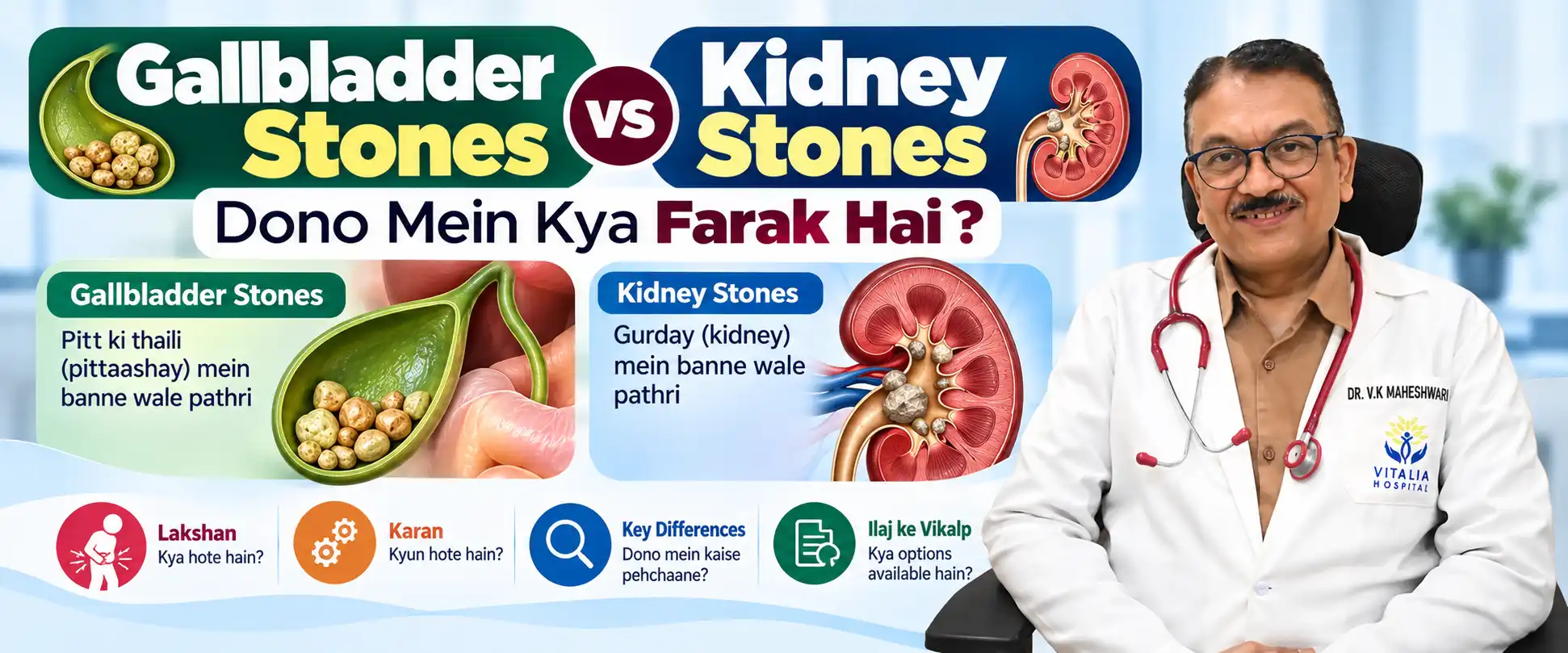
Gallbladder Stones vs Kidney Stones: Symptoms, Causes and Key Differences
Abdominal pain is a common health concern, but identifying its exact cause can sometimes be difficult. Two conditions that may cause significant discomfort are gallbladder stones and kidney stones.
Although both conditions involve the formation of stones inside the body, they affect different organs, develop for different reasons, and require different treatment approaches.
Gallbladder stones usually develop in the gallbladder, an organ involved in storing bile for digestion. Kidney stones form in the kidneys when certain minerals and salts become concentrated in urine.
Understanding the difference between gallbladder stones vs kidney stones, including their symptoms, pain locations, causes, and treatment options, can help patients recognize warning signs and seek appropriate medical care.
1. What Are Gallbladder Stones?
Gallbladder stones, also called gallstones, are hardened deposits that form inside the gallbladder.
The gallbladder is a small organ located beneath the liver on the upper-right side of the abdomen. It stores bile, a digestive fluid produced by the liver that helps break down fats.
Gallstones may form when substances in bile, such as cholesterol or bilirubin, become imbalanced.
Some gallstones are small, while others may grow larger.
Many people with gallstones do not experience symptoms. However, when a stone blocks the flow of bile, it can cause pain, inflammation, or other complications.
2. What Are Kidney Stones?
Kidney stones are hard deposits made from minerals and salts that form inside the kidneys.
They may develop when urine becomes concentrated, allowing substances such as calcium, oxalate, or uric acid to crystallize.
Kidney stones vary in size and may remain in the kidney or travel into the ureter, the tube connecting the kidney to the bladder.
Small stones sometimes pass naturally through urine, while larger stones or those causing obstruction may require medical treatment.
Kidney stones can cause severe pain, especially when they move into the ureter and obstruct urine flow.
3. Gallbladder Stones vs Kidney Stones: What Is the Difference?
The main difference is the organ affected and the symptoms produced.
| Feature | Gallbladder Stones | Kidney Stones |
|---|---|---|
| Organ affected | Gallbladder | Kidneys or urinary tract |
| Main function involved | Digestion and bile storage | Urine formation and drainage |
| Common pain location | Upper-right abdomen | Side, back, or flank |
| Pain radiation | Right shoulder or back | Lower abdomen or groin |
| Pain pattern | Often steady attacks lasting 30 minutes to several hours | Often severe, fluctuating pain |
| Common associated symptoms | Nausea, vomiting, digestive discomfort | Nausea, blood in urine, urinary symptoms |
| Diagnosis | Usually abdominal ultrasound | Urine tests and appropriate imaging |
| Treatment | Observation or gallbladder surgery, depending on symptoms | Observation, medication, or stone-removal procedures |
| Specialist | General or laparoscopic surgeon | Urologist |
Although pain patterns can provide clues, they cannot reliably distinguish these conditions without medical evaluation.
4. What Causes Gallbladder Stones?
Gallstones form when the composition or movement of bile changes in a way that encourages stone formation.
Possible contributing factors include:
- Excess cholesterol in bile
- Increased bilirubin in certain medical conditions
- Incomplete emptying of the gallbladder
- Obesity
- Rapid weight loss
- Pregnancy
- Family history of gallstones
- Increasing age
Not every patient with these risk factors develops gallstones.
5. What Causes Kidney Stones?
Kidney stones form when substances in urine become concentrated and crystallize.
Common contributing factors include:
- Inadequate fluid intake
- High levels of certain minerals in urine
- Excessive sodium consumption
- Family history of kidney stones
- Certain metabolic disorders
- Recurrent urinary infections
- Some medications and medical conditions
Different kidney stone types have different causes, so prevention strategies may depend on the stone’s composition.
6. What Are the Symptoms of Gallbladder Stones?
Many gallstones remain asymptomatic and are discovered during an ultrasound performed for another reason.
When symptoms occur, they may include:
- Sudden or persistent pain in the upper-right abdomen
- Pain in the upper-middle abdomen
- Pain spreading to the right shoulder or back
- Nausea
- Vomiting
- Pain episodes that sometimes occur after meals
Gallstone-related pain often lasts from about 30 minutes to several hours.
Fever, jaundice, or prolonged severe pain may indicate complications such as gallbladder inflammation or bile duct obstruction.
7. What Are the Symptoms of Kidney Stones?
Kidney stones may cause no symptoms while they remain in the kidney.
When a stone enters the ureter or blocks urine flow, symptoms may include:
- Severe pain in the side or back
- Pain spreading toward the lower abdomen or groin
- Blood in urine
- Nausea or vomiting
- Frequent urination
- Burning or discomfort during urination
- Difficulty passing urine in some cases
Kidney stone pain may come in waves and change location as the stone moves.
Fever or chills with suspected kidney stones may indicate infection and require urgent medical attention.
8. Gallbladder Pain vs Kidney Stone Pain: How Can You Identify the Difference?
Pain location is one of the most useful clues, although it is not enough to make a diagnosis.
Gallbladder Stone Pain
Gallbladder pain commonly occurs in the upper-right or upper-middle abdomen.
It may spread toward the right shoulder blade or back and is sometimes triggered after eating.
The pain is often relatively steady during an episode.
Kidney Stone Pain
Kidney stone pain commonly begins in the flank or side of the back.
It may travel toward the lower abdomen or groin.
The pain can be severe and fluctuate in intensity as the stone moves through the urinary tract.
Important: Other medical conditions can cause similar pain. Persistent or severe abdominal, flank, or back pain should be evaluated by a healthcare professional.
9. Can Gallbladder Stones Cause Back Pain?
Yes. Gallbladder stones can cause pain that radiates to the back, particularly around the right shoulder blade.
This occurs because pain from the gallbladder may be felt in nearby regions rather than only over the organ itself.
However, back pain alone does not confirm gallstones.
Muscle problems, kidney conditions, and other abdominal disorders can produce similar symptoms.
10. Can Kidney Stones Cause Stomach Pain?
Yes. Kidney stones can cause abdominal pain, particularly when a stone moves into the ureter.
Pain may begin in the flank and spread toward the lower abdomen or groin.
Some patients also experience nausea and vomiting.
Because abdominal pain can have many causes, imaging and clinical evaluation may be necessary to identify the source.
11. How Are Gallbladder Stones Diagnosed?
Diagnosis generally involves medical history, physical examination, and imaging.
Abdominal Ultrasound
Ultrasound is commonly the first imaging test used to detect gallstones.
It can also help identify signs of gallbladder inflammation.
Blood Tests
Blood tests may be recommended to assess liver function, inflammation, or complications.
Additional Imaging
In selected patients, tests such as MRCP or other imaging may be required to investigate suspected bile duct stones or complications.
The choice of tests depends on symptoms and examination findings.
12. How Are Kidney Stones Diagnosed?
Kidney stones may be diagnosed using several investigations.
Urine Tests
Urine tests can help identify blood, infection, and other abnormalities.
Blood Tests
Blood investigations may assess kidney function and certain metabolic factors.
Ultrasound
Ultrasound may help detect kidney stones or urinary tract obstruction.
CT Scan
A non-contrast CT scan is commonly used in appropriate patients when detailed imaging is needed.
The doctor selects the investigation based on symptoms, age, pregnancy status, and other clinical considerations.
13. Can Gallbladder Stones Be Treated Without Surgery?
Gallstones that do not cause symptoms often do not require immediate treatment.
However, patients with recurrent symptoms or complications may require gallbladder removal surgery.
Non-Surgical Management
Observation may be appropriate for asymptomatic gallstones.
Certain medications may dissolve selected cholesterol stones, but they are suitable for relatively few patients, can take a long time, and stones may recur.
Laparoscopic Gallbladder Surgery
Laparoscopic cholecystectomy is a commonly recommended treatment for symptomatic gallstones.
During this procedure, the surgeon removes the gallbladder through small abdominal incisions.
Removing the gallbladder generally prevents future gallbladder stone attacks, although stones can occasionally develop in the bile ducts.
The decision to operate depends on symptoms, complications, and the patient’s overall health.
14. Can Kidney Stones Pass Naturally?
Yes. Some small kidney stones can pass naturally through the urinary tract.
The likelihood of passing a stone depends on its size, location, and other factors.
Treatment Options
- Pain management
- Appropriate hydration
- Medication to help selected ureteric stones pass
- Shock wave lithotripsy
- Ureteroscopy
- Percutaneous nephrolithotomy for selected large or complex stones
The treatment depends on stone size, obstruction, infection, kidney function, and symptoms.
Patients with severe pain, fever, reduced urine output, or persistent vomiting require prompt medical evaluation.
15. Which Is More Dangerous: Gallbladder Stones or Kidney Stones?
Both conditions can become serious if complications develop.
Possible Gallbladder Stone Complications
- Acute cholecystitis (gallbladder inflammation)
- Bile duct obstruction
- Cholangitis (bile duct infection)
- Gallstone pancreatitis
Possible Kidney Stone Complications
- Urinary tract obstruction
- Kidney infection
- Kidney damage from prolonged obstruction
- Sepsis when infection occurs with an obstructed urinary system
Neither condition is automatically more dangerous than the other.
The severity depends on the location of the stone, degree of obstruction, infection, and other medical factors.
16. When Should You Seek Emergency Medical Care?
Seek urgent medical attention if you experience:
- Severe or persistent abdominal or flank pain
- Fever or chills with suspected stones
- Yellowing of the eyes or skin
- Repeated vomiting or inability to keep fluids down
- Difficulty passing urine or very little urine
- Severe weakness, fainting, or confusion
Fever with an obstructed urinary tract or bile duct can indicate a potentially life-threatening infection.
Do not delay emergency assessment if these symptoms occur.
17. Gallbladder Stone Treatment at Vitalia Hospital, Ranchi
Patients experiencing recurrent upper abdominal pain, nausea, or other symptoms associated with gallstones may require evaluation by a general or laparoscopic surgeon.
Vitalia Hospital, Ranchi, provides general and laparoscopic surgical consultation for gallbladder-related conditions.
Consult Dr. V.K. Maheshwari
Dr. V.K. Maheshwari, MBBS, MS, FICS, FIAGES, is a Senior Consultant General & Laparoscopic Surgeon associated with Vitalia Hospital, Ranchi.
His surgical practice includes the evaluation and management of gallbladder conditions and laparoscopic surgical procedures.
Following medical examination and appropriate investigations, patients may be advised about observation, further diagnostic testing, or surgery when necessary.
Patients with suspected kidney stones may require assessment by a physician or urologist, depending on the condition.
Looking for gallbladder stone treatment in Ranchi?
Contact Vitalia Hospital to arrange a surgical consultation and discuss the most appropriate treatment options.
18. Frequently Asked Questions About Gallbladder Stones vs Kidney Stones
1. Are gallbladder stones and kidney stones the same?
No. Gallbladder stones form in the gallbladder from substances in bile, while kidney stones develop in the kidneys from minerals and salts in urine.
2. Which stone causes more pain?
Both conditions can cause severe pain. The intensity varies depending on the individual and whether a stone causes obstruction or inflammation.
3. Can gallbladder stones cause pain on the right side?
Yes. Gallbladder stones commonly cause pain in the upper-right abdomen, sometimes spreading toward the right shoulder or back.
4. Can kidney stones cause pain on the right side?
Yes. Kidney stones can cause pain on either side of the back or flank, depending on which kidney or ureter is affected.
5. Can gallbladder stones pass through urine?
No. Gallstones form in the biliary system and cannot pass through urine. Kidney stones may pass through the urinary tract.
6. Can kidney stones be removed through gallbladder surgery?
No. Gallbladder surgery treats gallbladder conditions. Kidney stones require a separate treatment approach involving the urinary system.
7. Can gallstones disappear naturally?
Some gallstones remain asymptomatic for years. They generally do not dissolve spontaneously, although selected cholesterol stones may respond to medication under medical supervision.
8. Can drinking water remove gallbladder stones?
No. Drinking water does not dissolve or remove gallstones. Adequate hydration is important for general health and may help reduce the risk of certain kidney stones.
9. Can both gallbladder stones and kidney stones occur together?
Yes. A person can have both conditions because they affect different organs and develop through different processes.
10. Which test detects gallbladder stones?
Abdominal ultrasound is commonly used to identify gallbladder stones.
11. Which test detects kidney stones?
Ultrasound and CT imaging may be used, depending on the patient’s condition and the suspected stone location.
12. Is surgery always necessary for gallbladder stones?
No. Asymptomatic gallstones often do not require surgery. However, recurrent symptoms or complications may make surgery appropriate.
13. Do all kidney stones require surgery?
No. Some stones pass naturally, while others require medication or procedures depending on their size, location, and associated complications.
14. Which doctor should I consult for gallbladder stones?
A general or laparoscopic surgeon can assess symptomatic gallstones and recommend treatment.
15. Which doctor should I consult for kidney stones?
A urologist commonly evaluates and treats kidney stones, particularly when obstruction or a stone-removal procedure is involved.
Conclusion
Although gallbladder stones and kidney stones may both cause abdominal or back pain, they are different conditions affecting different organs.
Gallstones commonly cause upper-right abdominal pain and may require gallbladder removal when symptomatic. Kidney stones often cause flank pain that can radiate toward the groin, and treatment depends on stone size, location, and complications.
Understanding the symptoms and warning signs can help patients seek timely medical evaluation.
For gallbladder-related symptoms and surgical consultation, Vitalia Hospital, Ranchi, provides general and laparoscopic surgery services.
Medical Disclaimer: This article is intended for educational purposes only and does not replace professional medical advice, diagnosis, or treatment. Persistent or severe symptoms require evaluation by a qualified healthcare professional.