
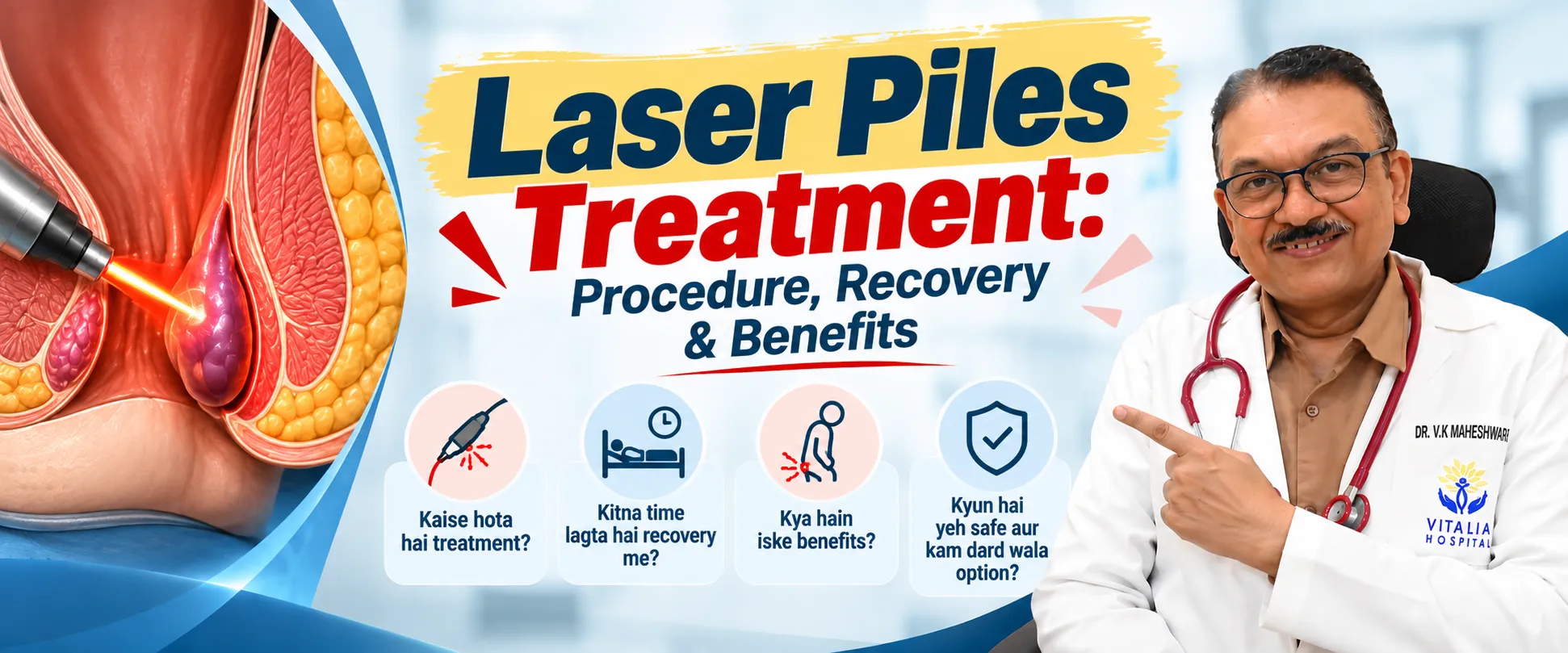
Laser Piles Treatment: Procedure, Recovery Time & Benefits
Piles, also known as haemorrhoids, are a common medical condition that can cause pain, bleeding, itching, and discomfort during bowel movements. While mild cases may improve with lifestyle changes and medication, some patients require additional medical treatment.
Laser piles treatment is one of the procedures that may be considered for selected patients with haemorrhoids. It uses laser energy to treat haemorrhoidal tissue, with the aim of reducing symptoms while limiting damage to surrounding tissue.
If you are experiencing persistent piles symptoms and looking for laser piles treatment in Ranchi, understanding the procedure, recovery time, benefits, and possible risks can help you make an informed decision.
1. What Are Piles?
Piles, medically known as haemorrhoids, are swollen or enlarged blood vessels in the lower rectum or around the anus. They can develop due to increased pressure in the veins of the anal and rectal region.
Piles are generally classified into two main types:
Internal Piles: These develop inside the rectum and may cause painless bleeding during bowel movements. In some cases, they may protrude outside the anus.
External Piles: These develop under the skin around the anus and may cause swelling, itching, irritation, or pain.
Common Symptoms of Piles
- Bright-red bleeding during or after bowel movements
- Pain or discomfort around the anus
- Itching and irritation
- Swelling or a lump near the anal opening
- Difficulty sitting comfortably
- Prolapse of haemorrhoidal tissue in some cases
Common contributing factors include constipation, excessive straining, prolonged sitting on the toilet, pregnancy, and a low-fibre diet.
Not every patient experiences the same symptoms, and rectal bleeding should always be evaluated rather than automatically attributed to piles.
2. When Do Piles Need Medical Treatment?
Mild piles may improve with dietary changes, adequate hydration, better bowel habits, and appropriate medication.
However, medical evaluation becomes important when symptoms persist, recur, or affect daily activities.
You should consult a doctor if you experience:
- Frequent or persistent rectal bleeding
- Severe pain around the anus
- Swelling that does not improve
- Recurrent haemorrhoid prolapse
- Symptoms that continue despite conservative treatment
- Difficulty performing everyday activities due to discomfort
Heavy bleeding, dizziness, fainting, or severe anal pain requires prompt medical attention.
A doctor may recommend medication, office-based procedures, or surgery depending on the severity and type of haemorrhoids.
3. What Is Laser Treatment for Piles?
Laser piles treatment is a procedure that uses focused laser energy to treat haemorrhoidal tissue.
One technique, known as laser haemorrhoidoplasty, involves delivering laser energy into the haemorrhoidal tissue to produce controlled shrinkage.
The goal is to reduce haemorrhoidal swelling and improve symptoms while preserving surrounding tissue where possible.
Potential Benefits of Laser Piles Treatment
In appropriately selected patients, potential benefits may include:
- Limited external tissue cutting in certain techniques
- Less postoperative discomfort in some patients
- Reduced bleeding in selected cases
- Smaller treatment wounds
- Shorter recovery in some patients
- Earlier return to routine activities
However, these benefits are not guaranteed for every patient. Results depend on the type and grade of piles, the technique used, and the patient’s overall health.
Laser treatment is not necessarily superior to every conventional procedure.
4. How Is Laser Piles Treatment Performed?
Laser piles treatment is generally performed through a series of steps.
Step 1: Medical Consultation and Examination
The surgeon reviews the patient’s symptoms, medical history, and previous treatments.
A physical examination and, where appropriate, anoscopy or other investigations help determine the type and grade of haemorrhoids.
Step 2: Anaesthesia
The procedure is performed using an appropriate form of anaesthesia, which may include local, regional, or general anaesthesia depending on the technique and patient.
Step 3: Laser Application
For laser haemorrhoidoplasty, a laser fibre is positioned within the haemorrhoidal tissue.
Controlled laser energy is delivered to treat the enlarged tissue and encourage shrinkage.
The precise technique varies according to the procedure and the patient’s condition.
Step 4: Postoperative Observation
After treatment, the patient is monitored for bleeding, discomfort, and other immediate postoperative concerns.
Step 5: Discharge and Recovery Instructions
Some patients may be discharged on the same day, while others may require additional observation.
The surgeon provides instructions regarding medication, bowel movements, hygiene, diet, and follow-up care.
5. Who May Be Suitable for Laser Treatment?
Laser piles treatment may be considered for selected patients with symptomatic haemorrhoids, particularly when conservative treatment has not provided adequate relief.
Suitability depends on factors such as:
- Grade and type of haemorrhoids
- Severity of bleeding or prolapse
- Previous treatment history
- Presence of external haemorrhoids
- Associated anal conditions
- General medical health
- Patient preferences and treatment goals
Some patients with advanced or complex haemorrhoids may benefit more from conventional haemorrhoidectomy or another established procedure.
A qualified surgeon should explain the available treatment options before recommending laser treatment.
6. Laser Treatment vs Conventional Piles Surgery
Both laser procedures and conventional surgery are used to treat selected cases of haemorrhoids, but they differ in technique and recovery.
| Factor | Laser Piles Treatment | Conventional Haemorrhoidectomy |
|---|---|---|
| Technique | Uses laser energy to treat tissue | Surgically removes haemorrhoidal tissue |
| Tissue removal | May not require extensive tissue excision | Involves tissue excision |
| Postoperative pain | May be lower in selected cases | Can be more pronounced |
| Bleeding | Varies by technique and patient | Varies by technique and patient |
| Recovery | May be quicker in selected cases | May require longer recovery |
| Recurrence | Possible | Possible |
| Suitability | Selected haemorrhoid types and grades | Often suitable for larger or more complex haemorrhoids |
Which treatment is better?
There is no single treatment that is best for every patient.
Laser procedures may be appropriate for certain haemorrhoids, while conventional surgery may offer more suitable or durable treatment for others.
The choice should be based on diagnosis, clinical evidence, expected outcomes, and the surgeon’s recommendation.
7. Is Laser Piles Treatment Painful?
Laser piles treatment is generally performed under anaesthesia, so patients should not experience significant pain during the procedure when anaesthesia is effective.
After treatment, some patients may experience:
- Mild to moderate discomfort
- Swelling
- A feeling of pressure
- Temporary pain during bowel movements
- Minor bleeding or discharge
The severity and duration of discomfort vary.
Although some laser techniques may cause less postoperative pain than conventional excisional surgery in selected patients, laser piles treatment is not completely painless.
Pain-relieving medication and appropriate postoperative care may help manage discomfort.
8. How Long Does Laser Piles Treatment Take?
The duration of laser piles treatment depends on the number, size, and grade of haemorrhoids, the surgical technique, and whether additional procedures are needed.
In uncomplicated cases, the procedure itself may take approximately 20–45 minutes, although the actual duration can be shorter or longer.
Patients should also allow additional time for preparation, anaesthesia, postoperative monitoring, and discharge assessment.
The surgeon can provide a more accurate estimate after examination.
9. What Is the Recovery Time After Laser Piles Treatment?
Recovery after laser piles treatment varies depending on the procedure, the severity of the condition, and the patient’s health.
Some patients can resume light daily activities within a few days, while others require more time.
During recovery, patients may experience temporary discomfort, swelling, or minor bleeding.
Tips for Recovery After Piles Treatment
Eat fibre-rich foods: Include vegetables, fruits, whole grains, and other fibre sources to help prevent constipation.
Drink adequate water: Proper hydration can help maintain softer stools.
Avoid straining: Excessive pressure during bowel movements can worsen discomfort.
Maintain hygiene: Follow the surgeon’s instructions for cleaning and caring for the treated area.
Take prescribed medication: Use pain relief, stool softeners, or other medication only as advised.
Attend follow-up appointments: Regular follow-up allows the surgeon to monitor healing and address complications.
Patients should seek medical attention if they develop heavy bleeding, fever, severe worsening pain, or difficulty passing urine.
10. When Can You Return to Work After Laser Piles Treatment?
The time required to return to work depends on the patient’s recovery and the physical demands of their occupation.
Patients with desk-based jobs may be able to resume work within a few days after an uncomplicated procedure, provided their surgeon considers it safe.
People involved in heavy lifting, prolonged physical activity, or physically demanding work may require a longer recovery period.
Factors influencing the return-to-work timeline include:
- Type of treatment performed
- Severity of postoperative pain
- Nature of the patient’s occupation
- Presence of complications
- Individual healing response
Patients should avoid strenuous activities until cleared by their surgeon.
11. Can Piles Come Back After Laser Treatment?
Yes. Haemorrhoids can recur after laser treatment or other piles procedures.
Recurrence depends on several factors, including the severity of the original condition, treatment technique, bowel habits, and individual patient factors.
How Can You Reduce the Risk of Recurrence?
- Maintain a fibre-rich diet
- Drink sufficient water
- Avoid prolonged straining during bowel movements
- Manage constipation and chronic diarrhoea
- Exercise regularly when medically appropriate
- Avoid sitting on the toilet for unnecessarily long periods
- Follow medical advice and postoperative instructions
These measures may help reduce symptoms and recurrence risk, but they cannot guarantee that piles will never return.
12. Laser Piles Treatment at Vitalia Hospital, Ranchi
If you are experiencing persistent bleeding, pain, swelling, or discomfort due to piles, seeking medical evaluation can help determine the most appropriate treatment.
Vitalia Hospital, Ranchi, provides general surgical and laser proctology services for patients experiencing piles and other anorectal conditions.
Consult Dr. V.K. Maheshwari
Dr. V.K. Maheshwari is a Senior Consultant General & Laparoscopic Surgeon and Laser Proctologist associated with Vitalia Hospital, Ranchi.
His qualifications include MBBS, MS, FICS, and FIAGES, and his surgical practice includes the management of piles, fissures, fistulas, hernias, gallbladder conditions, and other general surgical problems.
At Vitalia Hospital, treatment planning begins with an assessment of the patient’s symptoms, medical history, examination findings, and the severity of the condition.
Depending on the diagnosis, management may involve medication, lifestyle changes, laser-based treatment, or conventional surgical procedures.
Looking for piles treatment in Ranchi?
Consult the surgical team at Vitalia Hospital to understand your diagnosis and available treatment options.
13. Frequently Asked Questions About Laser Piles Treatment
1. Is laser piles treatment safe?
Laser piles treatment can be an appropriate option for selected patients when performed by a suitably trained surgeon. However, like other medical procedures, it carries potential risks, including bleeding, infection, pain, recurrence, and other complications. Suitability should be assessed individually.
2. Is laser treatment a permanent cure for piles?
No treatment can guarantee that haemorrhoids will never recur. Laser treatment may improve symptoms, but recurrence remains possible. Healthy bowel habits and appropriate follow-up care may help reduce the risk.
3. Can Grade 3 piles be treated with laser?
Some patients with Grade 3 haemorrhoids may be considered for laser treatment, depending on the type and severity of prolapse and other clinical findings. Conventional surgery or another procedure may be more appropriate in certain cases.
4. Can Grade 4 piles be treated with laser?
Grade 4 haemorrhoids are permanently prolapsed and cannot be manually pushed back into place. They often require surgical assessment, and conventional haemorrhoidectomy may be preferred in many cases. Laser treatment alone may not be appropriate.
5. Does laser piles treatment require hospital admission?
Some laser procedures can be performed as day-care procedures, allowing discharge on the same day. However, the need for admission depends on the patient’s condition, anaesthesia, procedure, and postoperative recovery.
6. How many days of rest are needed after laser piles surgery?
Some patients may return to light activities within a few days, but recovery varies. The surgeon should advise when the patient can safely return to work, exercise, and normal daily activities.
7. Is bleeding normal after laser piles treatment?
A small amount of bleeding may occur during recovery after some procedures. However, heavy bleeding, bleeding that continues or worsens, or bleeding accompanied by dizziness requires urgent medical attention.
8. Can piles be treated without surgery?
Yes. Many patients with mild haemorrhoids can improve with fibre-rich diets, adequate hydration, constipation management, medication, or office-based procedures. Surgery is generally considered when other treatments are insufficient or the condition is more severe.
9. What is the cost of laser piles treatment in Ranchi?
The cost depends on the grade and complexity of haemorrhoids, procedure type, anaesthesia, hospital requirements, and other medical factors. Patients should request an individualized treatment estimate after consultation.
10. Which doctor should I consult for laser piles treatment in Ranchi?
You can consult a qualified general surgeon, colorectal surgeon, or surgeon experienced in proctology. Patients seeking evaluation for piles can consult the surgical team at Vitalia Hospital, Ranchi.
11. Can laser piles treatment be performed without stitches?
Some laser haemorrhoidoplasty techniques do not require the same tissue excision and suturing used in conventional surgery. However, this depends on the technique, and additional procedures may sometimes be necessary.
12. What foods should I avoid after piles treatment?
Patients are generally advised to avoid foods that contribute to constipation and to follow their surgeon’s dietary recommendations. A fibre-rich diet and adequate fluid intake can support comfortable bowel movements during recovery.
Conclusion
Piles can cause significant discomfort, bleeding, itching, and difficulty during bowel movements, but effective treatment options are available.
Laser piles treatment may offer benefits for appropriately selected patients, including limited tissue disruption and potentially quicker recovery. However, not every patient with piles requires laser treatment or surgery.
The most appropriate treatment depends on the grade of haemorrhoids, symptoms, overall health, and clinical evaluation.
If you are experiencing recurring piles symptoms or looking for laser piles treatment in Ranchi, consult the General Surgery and Laser Proctology team at Vitalia Hospital, Ranchi for diagnosis and personalized treatment advice.
Medical Disclaimer: This article is intended for general educational purposes and does not replace professional medical advice, diagnosis, or treatment. Surgical suitability, benefits, risks, and recovery vary between patients. All medical content should be reviewed by a qualified clinician before publication.